What is Energy Recovery and why is it Required?
Animal Hospital Energy Recovery Units
In just about every animal hospital and laboratory we design, at some point I have to have a conversation with our client about an ERV.
As building codes have evolved, one of the biggest changes has been the codification of energy restrictions. Buildings account for a significant share of energy use in the United States, so it is no surprise that codes now regulate how buildings consume energy. There is an entire industry that has grown around green design. You may have heard of the U.S. Green Building Council, LEED, World Green Building Council, Green Globes, or BREEAM. The list of agencies and standards developed in recent years is staggering.
Unlock Energy Savings: Mastering Fresh Air Management in Humidity
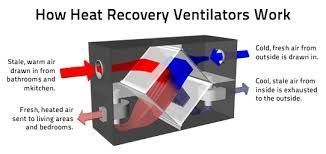
So it is no surprise that the building codes have been keeping up with the sustainability push. There have been many advancements in envelope design and products. One of the byproducts of the evolving code requirements is the need to capture the energy expended on the air that is exhausted from your building. Here in the south, it is typically hot and humid 7 or 8 months of the year. As a building owner you have to bring in 10 to 15% fresh air at all times. When the unit is running, 15% of the air coming out of the vents is fresh outside air that has been cooled and dehumidified. The other 85% of the air has also been re-cooled a little bit, but for the most part it is recirculating. In the heat of summer, when it is 90 degrees outside with 85% humidity, a good bit of energy is required to drop that air to 55 degrees. Which means that every cubic foot of air that is exhausted from the building takes that energy with it back to the outside.
This has not gone un-noticed by building officials. Enter the Energy Recovery Unit. This is a very large box that allows the air that is exhausted to pass through without mixing with the air coming in from the outside. Essentially it's a big radiator just like the one in your car. It allows the incoming stream of air to pass over and through the already cooled exhaust air before it leaves the building, thereby extracting some of that cooling prior to entering the HVAC unit. This drastically cuts down on the energy needed to cool and dehumidify the fresh air stream because it's been pre-cooled by the exhaust stream. In fact, both ASHRAE and the International Energy Codes now require this ERV if your building exhausts 30 or 35% of it's total air volume per hour.

Coincidentally, virtually every animal hospital, lab, orthodontics office, or nail salon will have a very high volume of exhaust air. Small ERV units can be as low as $4,000, while larger ones can jump to $15,000 or $20,000. Fortunately, that is a one-time expense that can pay big dividends for many years to come.
HDA Architects
Veterinary Portfolio
From general practice to specialty critical care — see how HDA designs veterinary environments that work as hard as the teams inside them.
✓ General & specialty clinics
✓ Critical care & emergency
✓ Floor plans & photography
Download Portfolio
Thank you for contacting us.
Here is your link to download our portfolio:
https://irp.cdn-website.com/2d294046/files/uploaded/HDA.PORTFOLIO_digital.pdf
Please try again later.
SHARE THIS
Latest Posts